Reflection and 2026 Prophetic Direction – Part 3
Within the confines of a small stone-walled prison cell, a sixteenth-century Carmelite friar was held in solitary confinement for seeking reform within his own monastic order. His punishment was austere in the extreme. With no bed, chair, or table, he slept on the bare floor. There was no window — only a small opening high in the wall, offering a meagre suggestion of the world beyond, its scant light and rank air barely circulating through the cell. One later witness would describe the space as “more like a tomb than a room.”
After nine months sustained on bread and water, subjected to regular beatings, public ridicule, and continual accusation, he made a remarkable escape in the summer of 1578. Having patiently loosened the lock of his cell over time, he slipped out by night and lowered himself through a window using knotted strips of cloth. His emaciated body, weakened and ulcerated, clothed only in a threadbare habit, eventually found refuge among a small community of nuns belonging to the reform movement known as the Discalced Carmelites. Yet even more extraordinary: some of the most revered devotional prose in Christian history was not written after his escape but conceived during his imprisonment. With books, paper, and correspondence forbidden, these verses were first etched into his heart and committed to memory in silence and darkness, before he ever had opportunity to put pen to paper.
Who was this fugitive? None other than the venerated Saint John of the Cross, perhaps best known for his later poem The Dark Night, which gives voice to the soul’s passage through purifying darkness toward spiritual maturity and interior freedom. But John wrote more than one work of lasting significance. During his imprisonment, he conceived The Spiritual Canticle, a poem that closely mirrors the Biblical Song of Songs and offers invaluable wisdom for the Bride’s journey into the governmental silence of God I have discussed in the last two posts. This is why I mention him here in prophetic direction for 2026:
As we survey our current station and weigh the choices before us, we are not without a roadmap or illumination.
Of course, the inspired canon of Scripture remains our ultimate plumbline and compass, yet voices like that of Saint John of the Cross shine through the centuries, pointing the way forward. In that respect, he was ahead of his time, and his life remains a legacy of deep union with the Bridegroom.
I want to summarise all that I have shared across these three posts by making this prophetic declaration, one that is faithful to Scripture and echoes the heartbeat of St John of the Cross:
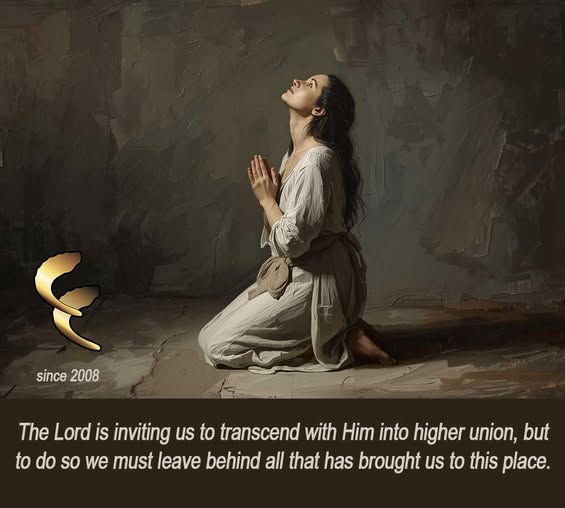
The Lord is inviting us to transcend with Him into higher union, but to do so we must leave behind all that has brought us to this place. This invitation is first relational, not missional; it requires sanctification, not discussion. We cannot come before God on our own terms or understanding, nor can we advocate for reformation or attempt to repair existing structures devoid of His glory. What is required now is not the rebuilding of what once was, but the courage to move forward in Bridal identity, aligned with the eschatological timeline only the Bride can occupy.